Table of Contents
10 Common Quality Problems in Tempered Glass Screen Protector Manufacturing
Overview
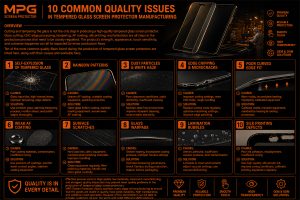
Cutting and tempering the glass is not the only step in producing a high quality tempered glass screen protector. Glass cutting, CNC edge processing, tempering, AF coating, silk printing, and lamination are all steps in the production process that need to be closely regulated. The product’s strength, appearance, touch sensitivity, and customer happiness can all be impacted by minor production flaws. Ten of the most common quality problems found during the production of tempered glass screen protectors are listed here, along with their causes and workable fixes.
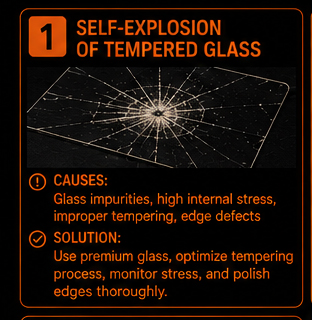
1. Self-Explosion of Tempered Glass
Ultra-thin tempered glass may occasionally shatter or break without any direct force during packing, shipping, or regular use.
- Glass imperfections, excessive internal tension, incorrect tempering, or small edge fractures are usually the causes of this problem.
- Solution: To reduce internal strain, choose premium glass, maximize the tempering process, keep an eye on the distribution of stress, and completely polish the edges.
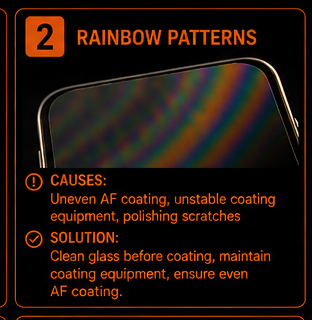
2. Patterns of rainbows
The overall appearance of the screen protector is changed and display quality is deteriorated by rainbow-colored marks on the glass surface.
- The most common causes of this include fine polishing scratches, uneven AF coating, and unstable coating equipment.
- Solution: Make sure the AF coating is applied evenly, clean the glass surface before coating, and maintain the coating apparatus on a regular basis.
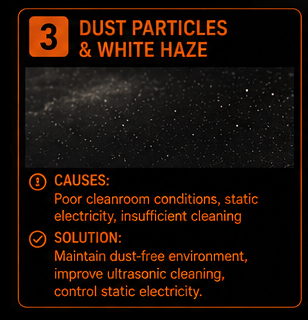
3. White Haze and Dust Particles
Customer happiness and display quality might be negatively impacted by dust trapped behind the screen protector or a fuzzy appearance.
- Static electricity, inadequate cleaning prior to manufacture, and poor cleanroom conditions are the most common causes.
- Solution: Throughout the manufacturing process, control static electricity, improve ultrasonic cleaning methods, and maintain a dust-free production environment.
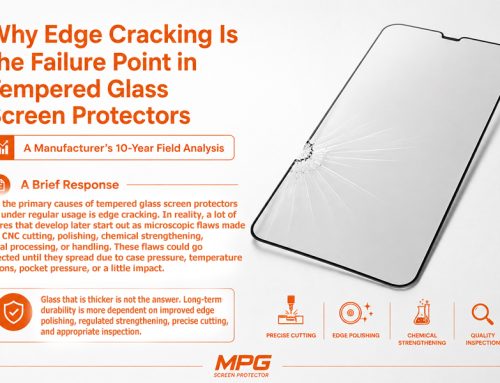
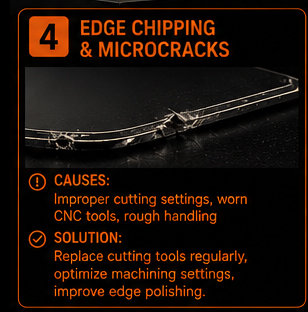
4. Microcracks and edge chipping.
The screen protector may get damaged and more likely to shatter if there are tiny chips or cracks at the glass edges.
- The most frequent causes of these errors are worn CNC tools, improper cutting settings, or rough handling during manufacture.
- Solution: To get smooth, durable edges, increase edge polishing, modify machining settings, and replace cutting tools often.
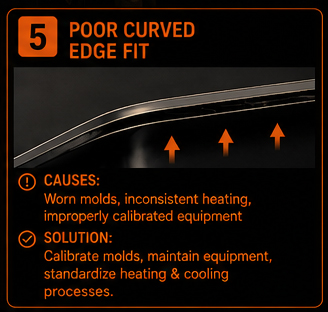
5. Inadequate Fit for Curved Edges
After installation, improperly curved edges of 2.5D and 3D screen protectors may result in lifting around the display.
- Worn bending molds, uneven heating, or incorrectly calibrated forming equipment are often linked to this problem.
- Solution: To guarantee consistent shape, regularly calibrate molds, maintain bending equipment, and standardize the heating and cooling procedures.
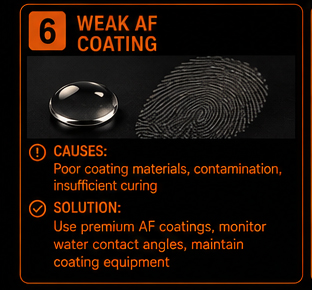
6. Inadequate anti-fingerprint (AF) protection
The AF coating is not functioning effectively if water, oil, or fingerprints adhere to the surface too rapidly.
- The most common causes are inadequate drying time, contamination, or subpar coating ingredients.
- Solution: Maintain coating equipment properly, use premium AF coating materials, and monitor water contact angles throughout testing.
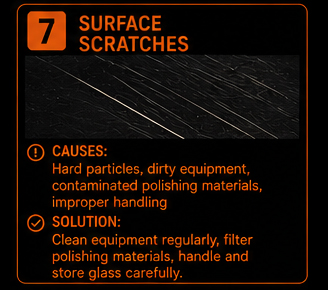
7. Scratches on surfaces
The appearance and protective effectiveness of the screen protector are diminished by obvious scratches.
- Hard particles, dirty equipment, contaminated polishing materials, or improper handling are often the causes of these marks.
- The solution is to filter polishing materials, clean manufacturing equipment often, and store and transport glass sheets carefully.
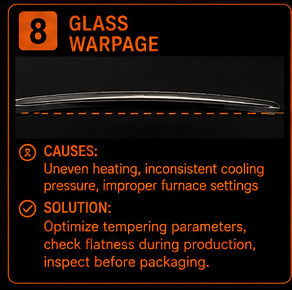
8. Warpage Glass
Air bubbles or installation problems might result from warped tempered glass that does not rest flat against the apparatus.
- Inappropriate furnace settings, uneven heating, and inconsistent cooling pressure are common causes of this issue.
- Solution: Modify the tempering conditions, check the flatness of the glass throughout production, and carry out quality checks before to packaging.
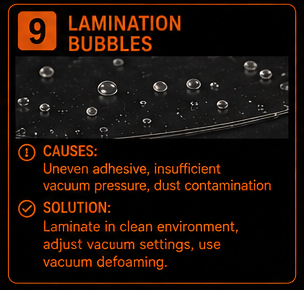
9. Bubbles of Lamination
The quality of the product and its ability to be installed are deteriorated by trapped air bubbles between the glass and the adhesive.
- Inadequate vacuum pressure, poor adhesive application, or dust contamination are typically the causes of this issue.
- Solution: Use vacuum defoaming to remove trapped air after performing lamination in a clean environment and correctly calibrating vacuum settings.
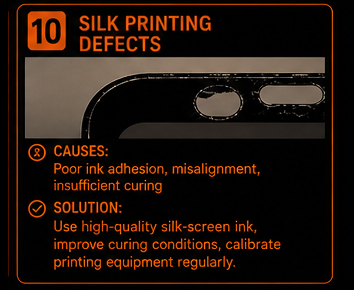
10. Silk Printing Defects
If the printing process is not properly controlled, black borders may seem hazy, uneven, or peel away after manufacture.
- Inadequate curing, improper printing alignment, and poor ink adherence are common culprits.
- Solution: Make sure your printing equipment is regularly calibrated, use premium silk-screen ink, and maintain constant curing conditions.
In conclusion
Effective process control, high-quality raw materials, cleanroom manufacturing, and stringent quality inspection may prevent most quality problems in the production of tempered glass screen protectors. MPG Screen Protector closely monitors every stage of manufacturing to ensure that the goods are stable in quality, have great durability, high transparency, and sensitive touch operation. Because of this commitment, we are able to provide customers all over the world with solid OEM and ODM solutions.

Also please visit our new product: