Table of Contents
OEM Tempered Glass Screen Protector Quality Control
A Simple 4-Stage QC System Buyers Should Audit
A Brief Response
For OEM tempered glass screen protectors, quality control involves more than simply a final examination. IQC, IPQC, FQC, and OQC are the four steps that a trustworthy manufacturer should adhere to. From raw supplies to the finished shipment, each stage inspects a distinct aspect of production. Defects, returns, and customer complaints may all be decreased with a robust quality control system.
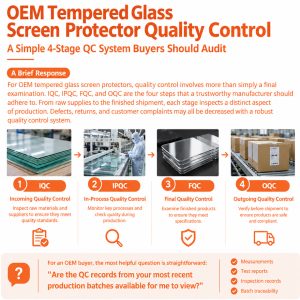
For an OEM buyer, the most helpful question is straightforward:
“Are the QC records from your most recent production batches available for me to view?”
Measurements, test reports, inspection records, and batch traceability should all be part of a true quality control system.
1. IQC — Incoming Quality Control
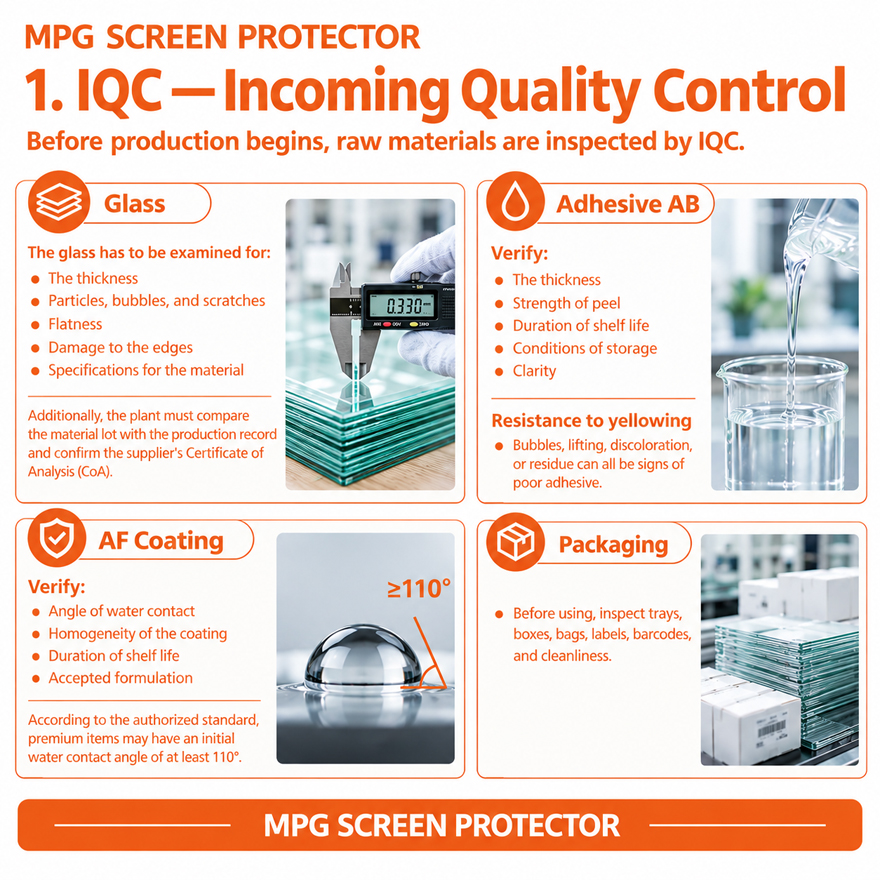
Before production begins, raw materials are inspected by IQC.
Glass
- The glass has to be examined for:
- The thickness
- Particles, bubbles, and scratches
- Flatness
- Damage to the edges
- Specifications for the material
Additionally, the plant must compare the material lot with the production record and confirm the supplier’s Certificate of Analysis (CoA).
Adhesive AB
Verify:
- The thickness
- Strength of peel
- Duration of shelf life
- Conditions of storage
- Clarity
Resistance to yellowing
- Bubbles, lifting, discoloration, or residue can all be signs of poor adhesive.
AF Coating
Verify:
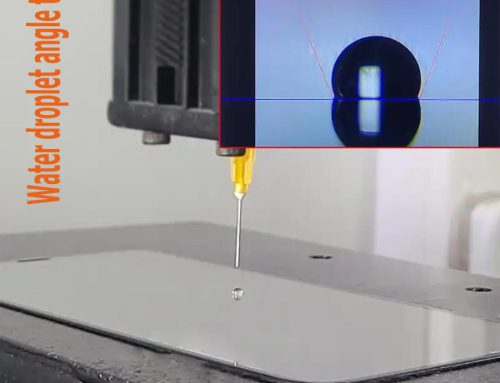
- Angle of water contact
- Homogeneity of the coating
- Duration of shelf life
- Accepted formulation
According to the authorized standard, premium items may have an initial water contact angle of at least 110°.
Packaging
- Before using, inspect trays, boxes, bags, labels, barcodes, and cleanliness.
2. In-Process Quality Control, or IPQC
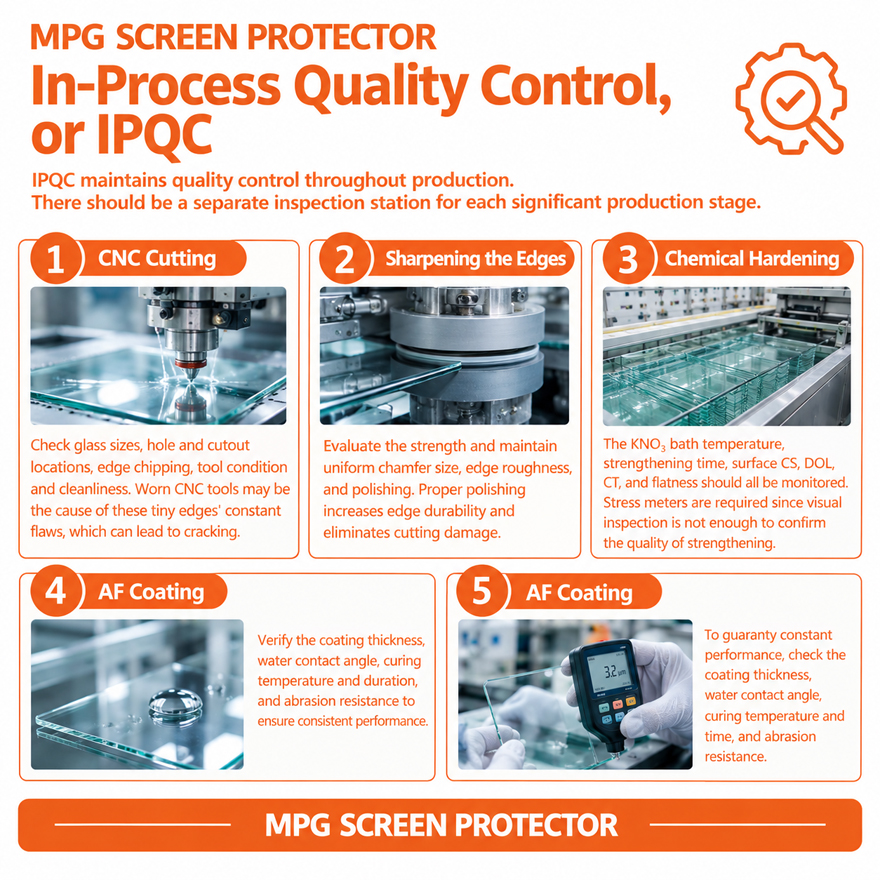
IPQC maintains quality control throughout production. There should be a separate inspection station for each significant production stage.
CNC Cutting
Check glass sizes, hole and cutout locations, edge chipping, tool condition and cleanliness. Worn CNC tools may be the cause of these tiny edges’ constant flaws, which can lead to cracking.
Sharpening the edges
- Evaluate the strength and maintain uniform chamfer size, edge roughness, and polishing. Proper polishing increases edge durability and eliminates cutting damage.
Chemical Hardening
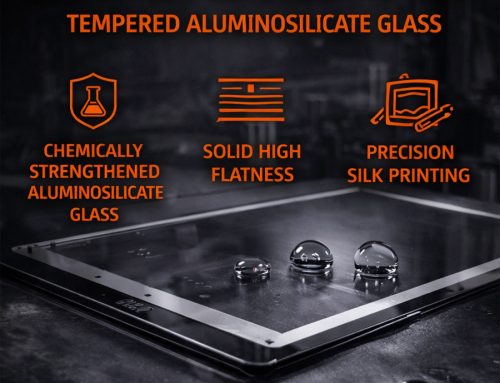
- The KNO₃ bath temperature, strengthening time, surface CS, DOL, CT, and flatness should all be monitored. Stress meters are required since visual inspection is not enough to confirm the quality of strengthening.
AF Coating
- Verify the coating thickness, water contact angle, curing temperature and duration, and abrasion resistance to ensure consistent performance.
3. Evaluation of Performance
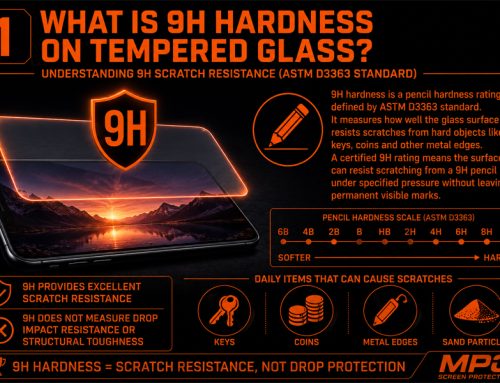
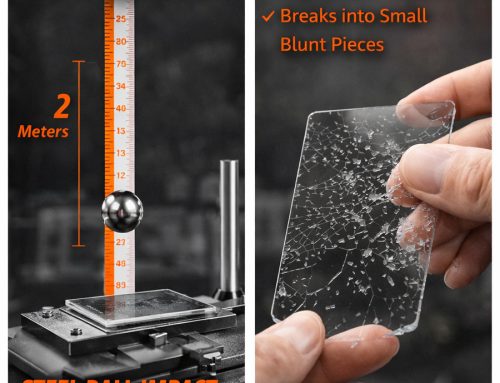
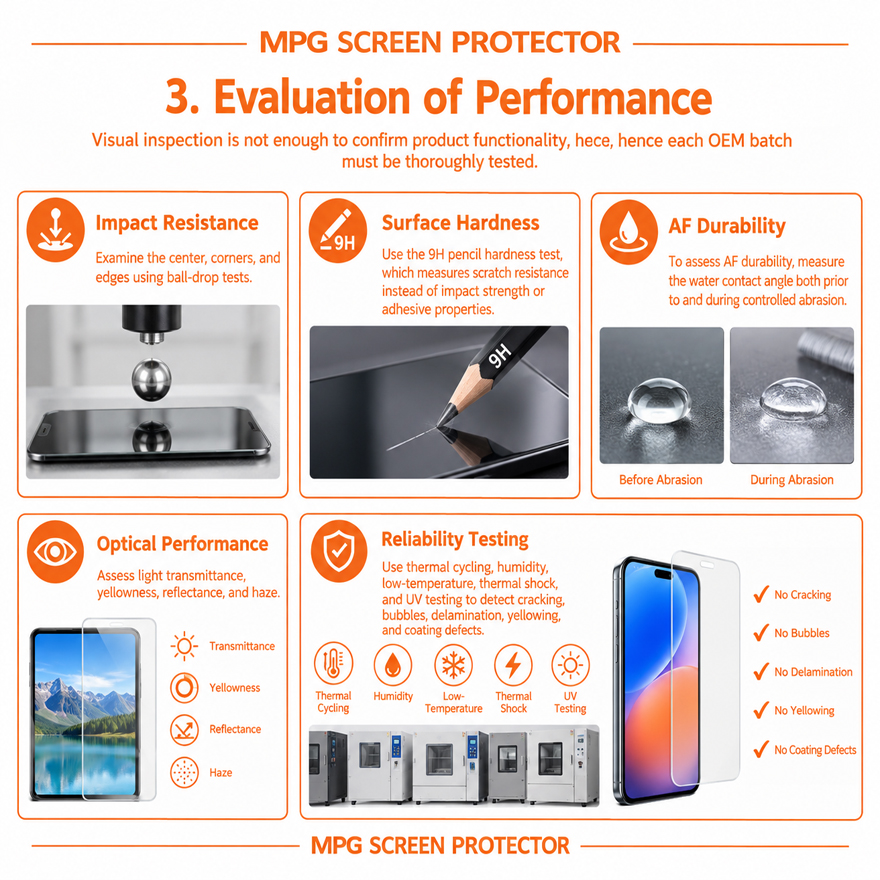
Visual inspection is not enough to confirm product functionality, hence each OEM batch must be thoroughly tested. Impact Resistance: Examine the center, corners, and edges using ball-drop tests. Surface Hardness: Use the 9H pencil hardness test, which measures scratch resistance instead of impact strength or adhesive properties. To assess AF durability, measure the water contact angle both prior to and during controlled abrasion. Optical Performance: Assess light transmittance, yellowness, reflectance, and haze. Reliability Testing: Use thermal cycling, humidity, low-temperature, thermal shock, and UV testing to detect cracking, bubbles, delamination, yellowing, and coating defects.
4. Final Quality Control (FQC)
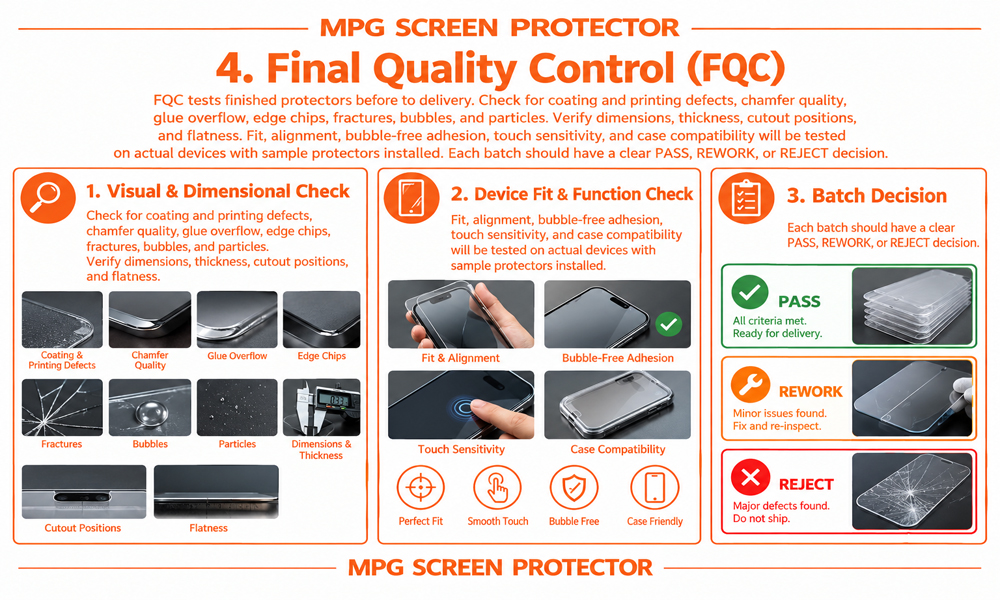
FQC tests finished protectors before telivery. Check for coating and printing defects, chamfer quality, glue overflow, edge chips, fractures, bubbles, and particles. Verify dimensions, thickness, cutout positions, and flatness.
Fit, alignment, bubble-free adhesion, touch sensitivity, and case compatibility will be tested on actual devices with sample protectors installed. Each batch should have a clear PASS, REWORK, or REJECT decision.
5. Outgoing Quality Control, or OQC
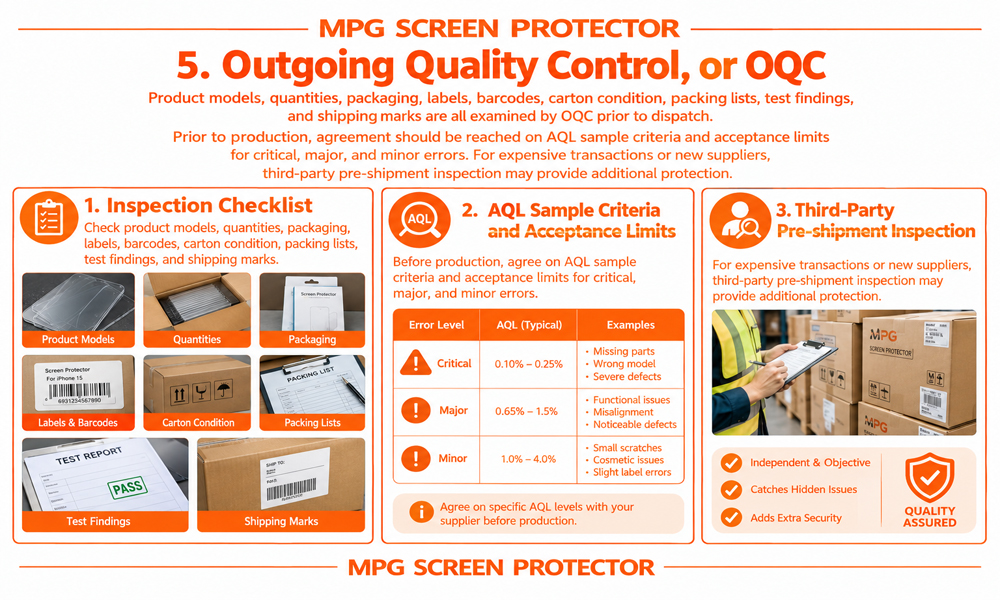
Product models, quantities, packaging, labels, barcodes, carton condition, packing lists, test findings, and shipping marks are all examined by OQC prior to dispatch.
Prior to production, agreement should be reached on AQL sample criteria and acceptance limits for critical, major, and minor errors. For expensive transactions or new suppliers, third-party pre-shipment inspection may provide additional protection.
6. Traceability and QC Records
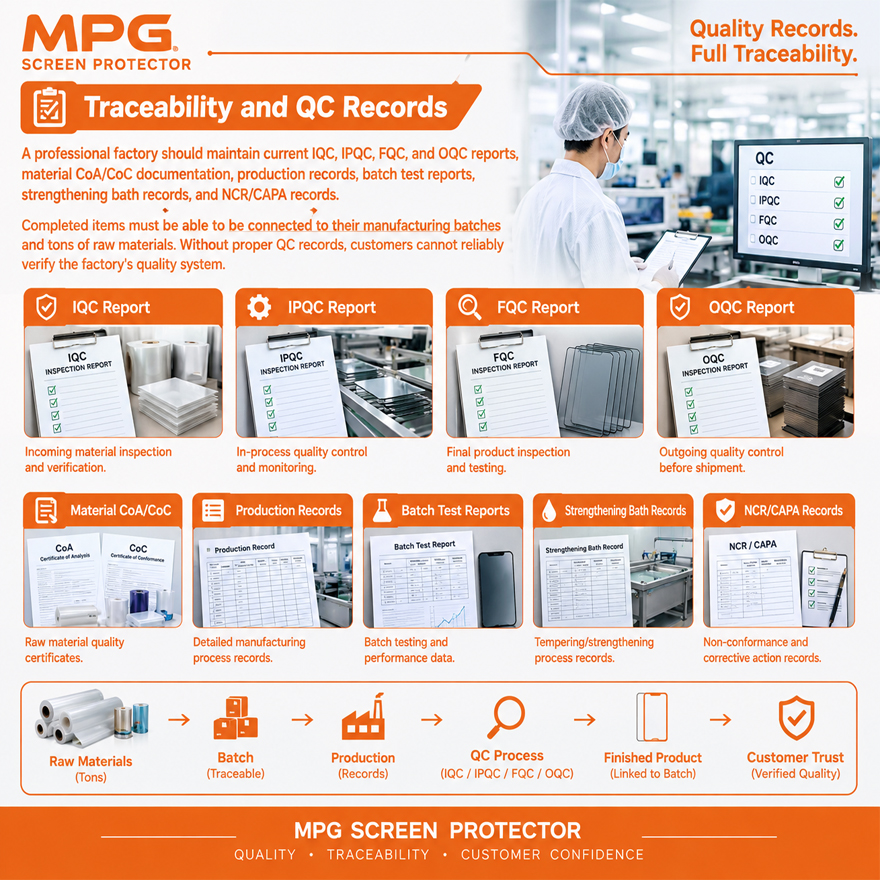
A professional factory should maintain current IQC, IPQC, FQC, and OQC reports, material CoA/CoC documentation, production records, batch test reports, strengthening bath records, and NCR/CAPA records.
Completed items must be able to be connected to their manufacturing batches and lots of raw materials. Without proper QC records, customers cannot reliably verify the factory’s quality system.
7. What Should an OEM Purchaser Look for?
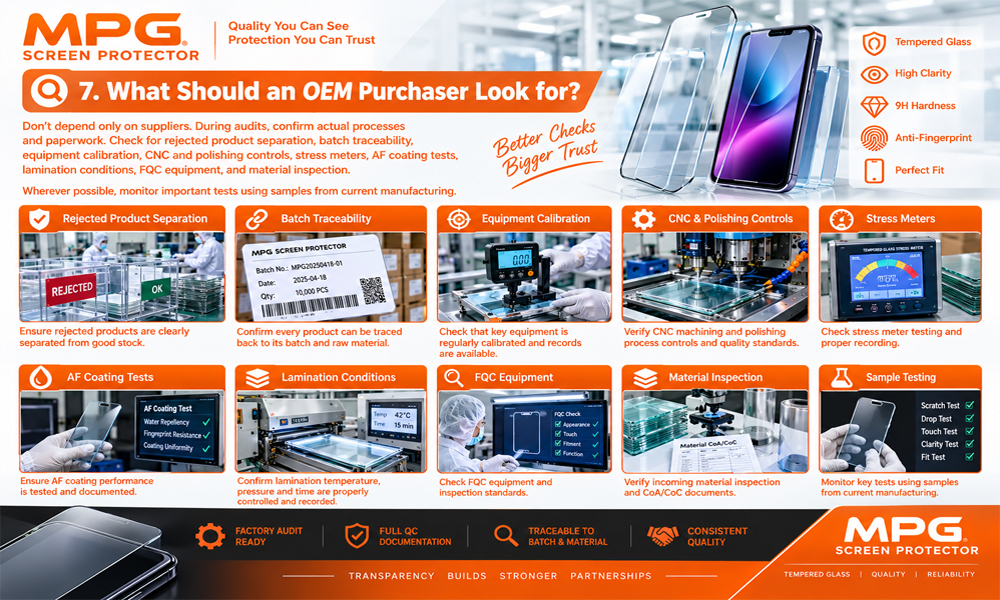
Don’t rely only on suppliers’ claims. During audits, confirm actual processes and paperwork. Check for rejected product separation, batch traceability, equipment calibration, CNC and polishing controls, stress meters, AF coating tests, lamination conditions, FQC equipment, and material inspection.
Wherever possible, monitor important tests using samples from current manufacturing.
How this runs at MPG: every OEM order passes three inspection stages — incoming material, assembly line and pre-shipment — third-party inspection is always welcome, and any quality issue is covered by free replacement or a refund within six months of collection.
In conclusion
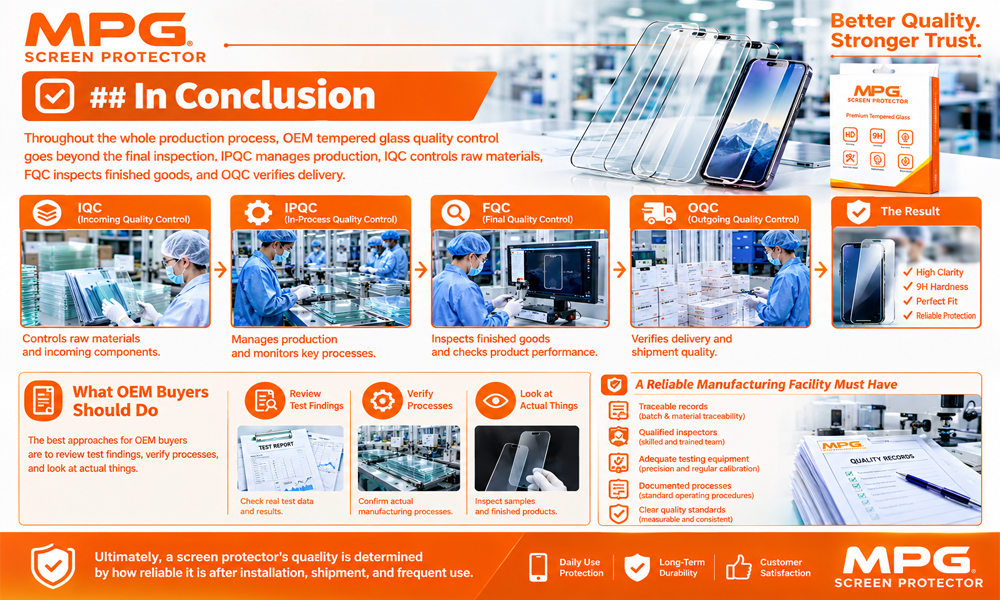
Throughout the whole production process, OEM tempered glass quality control goes beyond the final inspection. IPQC manages production, IQC controls raw materials, FQC inspects finished goods, and OQC verifies delivery.
The best approaches for OEM buyers are to review test findings, verify processes, and look at actual things. A reliable manufacturing facility must have traceable records, qualified inspectors, adequate testing equipment, documented processes, and clear quality standards.
Ultimately, a screen protector’s quality is determined by how reliable it is after installation, shipment, and frequent use.
Contact us for free samples or a QC report review: info@mobilephoneguard.com · WhatsApp +8618102732521
Related reading:
Edge Crush Test for Tempered Glass Screen Protectors
10 Common Quality Problems in Tempered Glass Screen Protector Manufacturing