Table of Contents
Tempered Glass Materials Compared: Glass Types, Glue and Coatings — A Buyer’s Guide
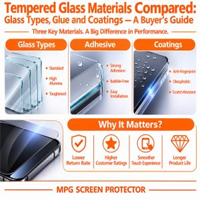
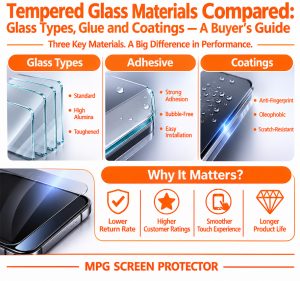
Two screen protectors may appear identical in a listing photo, but in the hands of a customer, they might behave significantly differently. There are three unique materials: coating, adhesive, and glass materials. Whether you have a private label line or buy in bulk, the specification you choose influences your return rate, ratings, and how frequently clients return. This guide compares the options in the order they matter.
1. The glass: soda-lime vs aluminosilicate (high-alumina)
Most tempered glass protectors start as one of these two substrates:
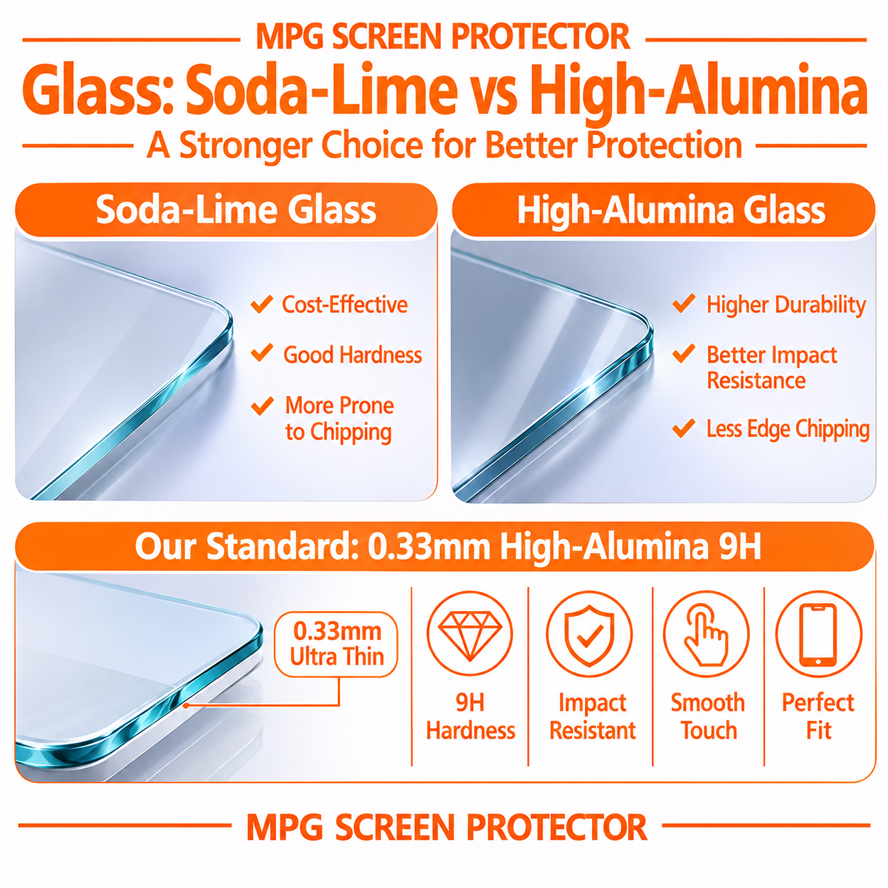
- Soda-lime glass is the most popular and inexpensive kind. It is sufficiently hard after tempering but is susceptible to chipping or spider cracking from corner drop and is brittle at the edges.
- Aluminum oxide in the melt results in a denser, more durable sheet of aluminosilicate glass (also known as “high-alumina”). It is more resistant to edge chipping, can withstand higher bending pressures before breaking, and has the thin, dense fracture pattern typical of high-quality glass. This is the substrate to spec for branded and retail lines.
- Our typical manufacturing glass is 0.33mm high-alumina with a surface hardness of 9H; it is thin enough to maintain touch sensitivity and case fit yet thick enough to absorb impact. When a supplier quotes a price that seems suspiciously low, the substrate is usually where the money came out.
2. Thickness: What does 0.33mm actually balance?
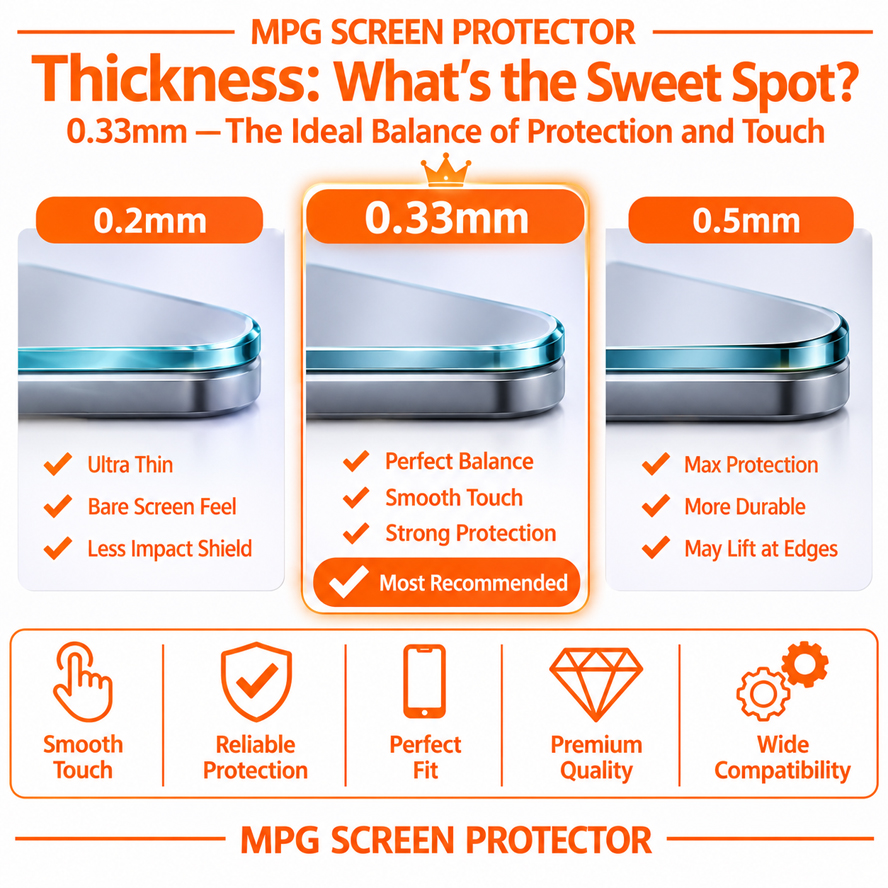
The market provides sizes ranging from 0.2mm to 0.5mm. While larger glass appears safer, it can lift at curved edges and struggle in tight circumstances, whereas thinner glass feels closer to the bare screen but has a smaller impact margin. The industry standard for flat and slightly curved screens is 0.33mm, which ensures optimum touch response, case compatibility, and drop protection. Spec thickness by channel, not by headline — repair chains swapping glass daily often prefer the standard 0.33mm for fit consistency across models.
3. The glue: full-coverage AB glue vs frame glue
- Adhesive is the invisible half of the product:
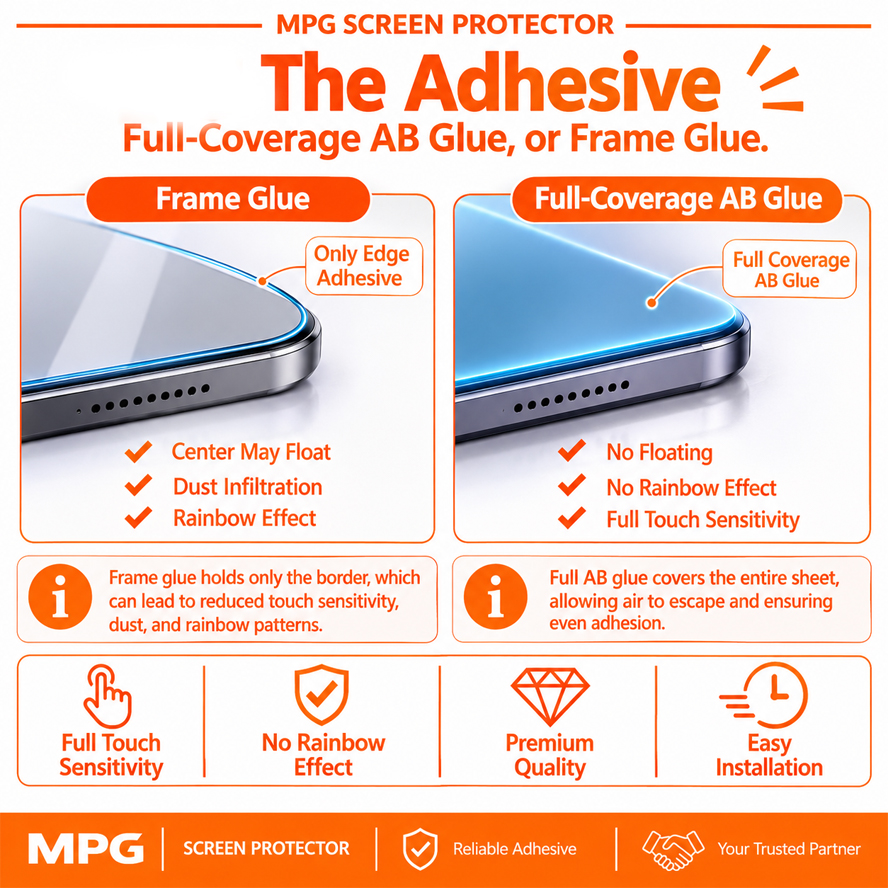
- Frame glue (edge glue) — adhesive only around the border. Cheaper and faster to produce, but the center floats: reduced touch sensitivity, dust creeping in, and rainbow/moisture patterns. Fine for gift packs, but wrong for branded lines.
- Full-coverage AB glue is an adhesive that covers the whole sheet, allowing the protector to expel air during installation and draw down evenly. Full touch sensitivity, no rainbow effect, no floating center. We picked Japanese AB glue for its steady viscosity and clean aging; cheap glue yellows and loses tack, causing edge lift months after the container has been sent.
- The quality of the adhesive has a considerable influence on the installation process. If your customers install it themselves, full-glue is not an upgrade — it is the product.
4. The coating: oleophobic layer
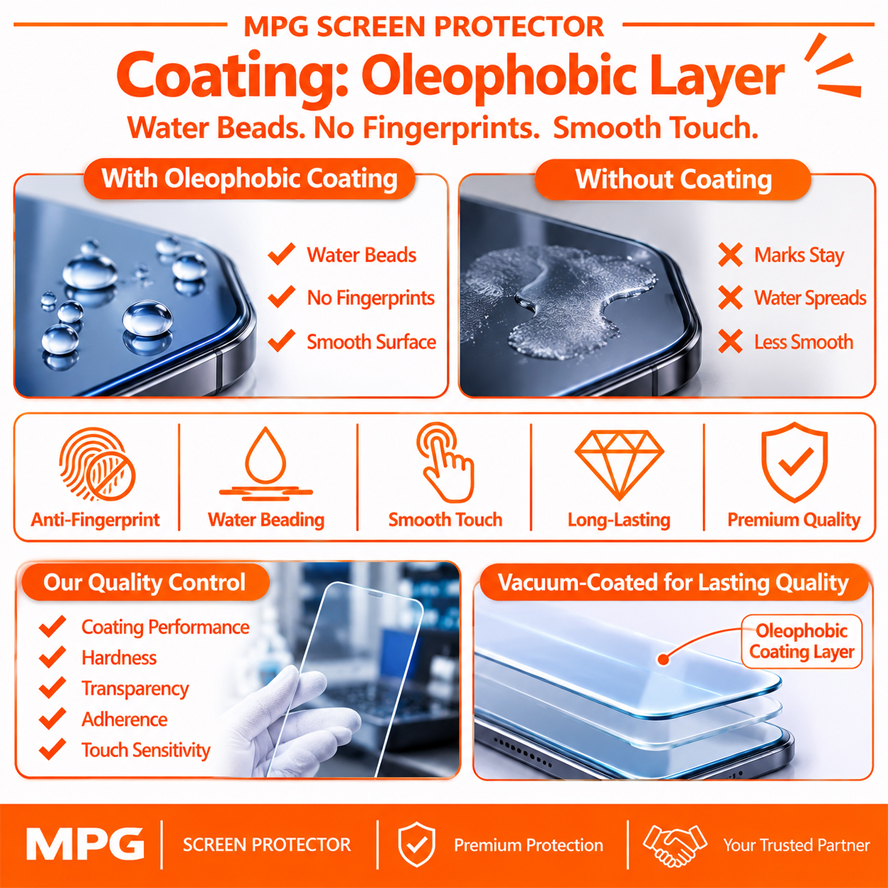
The oleophobic (anti-fingerprint) coating on a protector provides a premium feel: water beads, fingerprints disappear, and the surface remains smooth. The primary difference between coatings is their endurance; a properly placed vacuum-coated layer lasts the product’s whole life, but a sprayed coating may feel fine for the first week and then disintegrate by the second.
Put simply: a water drop should bead up tight and round, and a marker line should shrink into beads instead of spreading. Our QC process checks coating performance batch by batch, alongside hardness, transparency, adhesion and touch sensitivity — the full framework is here: OEM Tempered Glass Screen Protector Quality Control.
5. When glass is not the answer: PET, TPU and flexible films
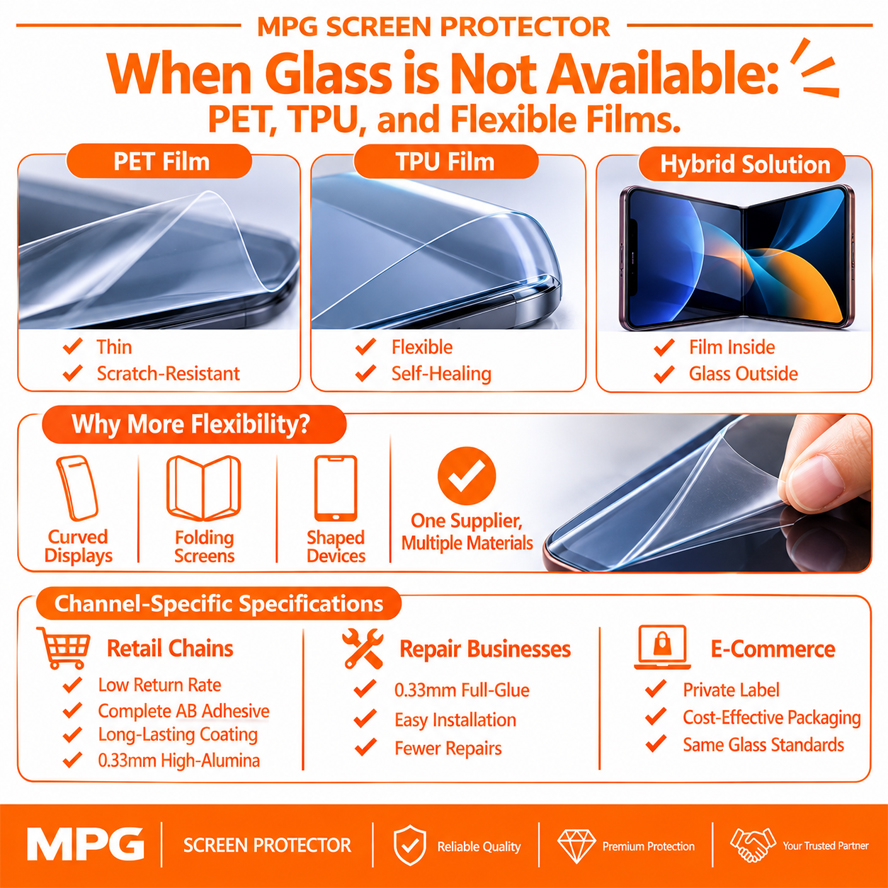
Tempered glass is limited to flat surfaces. Buyers want flexible materials for curved displays, folding inner screens, and shaped device panels.
- PET film is an inexpensive alternative to flat secondary screens; it is thin, transparent, and scratch-resistant.
- TPU film can wrap around curved edges in ways that glass cannot, and it is flexible and self-healing for minor scratches.
- Hybrid programs: Many distributors use film for the device’s folding internal display and glass for the flat external display.
See how this relates to non-phone devices here. A single supplier of glass protectors, PET/TPU films, and lens shields guarantees that requirements are consistent across the device: Custom Screen Protectors for Devices Beyond Phones.
Quick spec guide by channel
- Carrier and retail chains: 0.33mm high-alumina, full AB glue, durable oleophobic coating — lowest return rate.
- Repair shops: standard 0.33mm full-glue for fit consistency, fast install, fewer re-dos.
- E-commerce private label: same glass spec as retail, and spend the saved margin on packaging — unboxing is your storefront (start here: Private Label Screen Protector Manufacturer).
- Promotional bundles: soda-lime or frame-glue only if the channel truly prices at giveaway level — and expect the reviews to say so.
Frequently asked questions
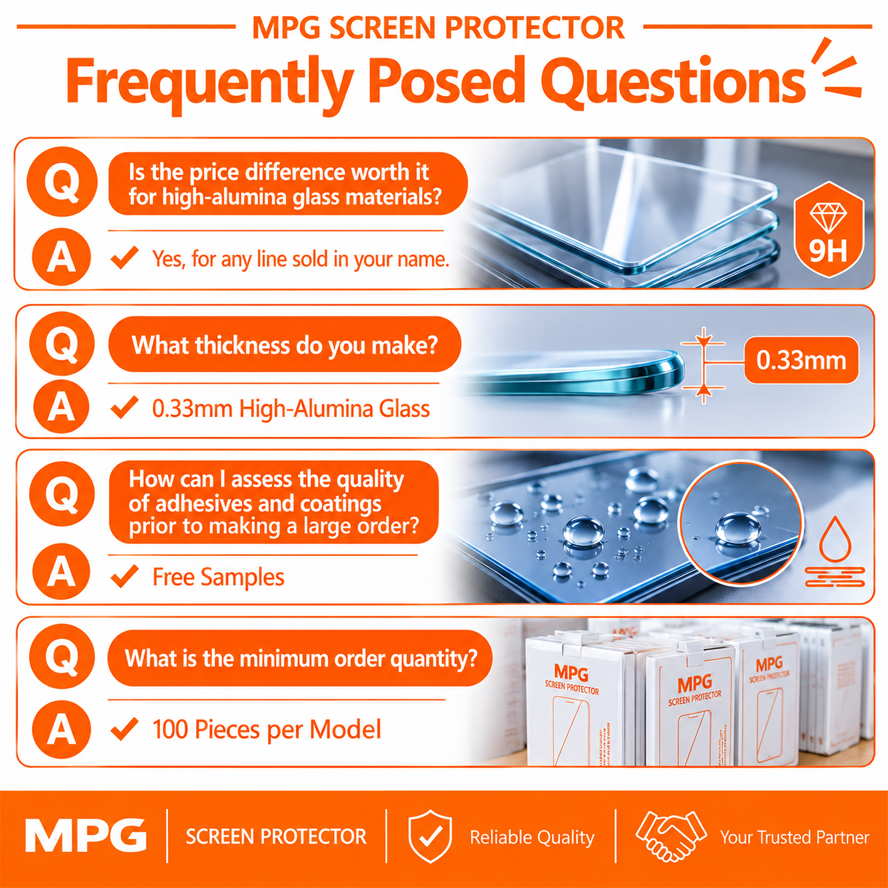
Is the price difference worth it for high-alumina glass materials?
- A: Yes, for any line sold in your name. Buyers pay special attention to edge chipping and fracture behavior, which are both influenced by the substrate. When compared to a single return shipment, the difference in components is negligible.
What thickness do you make?
- A: We use 0.33mm high-alumina glass with a hardness of 9H in matte, privacy, and anti-blue light treatments. If you supply us with your channel information, we will verify the correct specs for your models.
How can I assess the quality of adhesives and coatings prior to making a large order?
- A: Samples can be ordered for free and ship within three days. Install one, test the coating with water beads, and wait a week to see how well it sticks.
What is the minimum order quantity?
- A: 100 pcs per model for standard stock products (trial orders negotiable to 50); custom and private label orders start at 1,000 pcs per model (trial orders negotiable to 500). Lead time is 7–13 days, and quality issues are covered by free replacement or refund within six months of delivery.
For material specifications and quotes for your models, please contact us at info@mobilephoneguard.com. · WhatsApp Number: +8618102732521
Associated B2B Services
You may also like: Screen Protector Packaging Options: Retail Box, Blister & Bulk — Wholesale Guide