Table of Contents
Core Differences Between Double-Tempered and Triple-Tempered Glass Screen Protectors
Basic Overview
Terms like double-tempered or triple-tempered glass are frequently used when purchasing a smartphone screen protector. These labels are more than just advertising terminology. They explain how the glass is reinforced and how effectively it can shield your phone. Stress management, durability, edge protection, and long-term stability are where the true differences reside.
To assist you in selecting the best choice, this book provides an understanding of these distinctions using actual performance data and tried-and-true industry standards.
The Strengthening Process of Tempered Glass
By applying stress on its surface, tempered glass becomes more resilient. There are two primary techniques for strengthening:
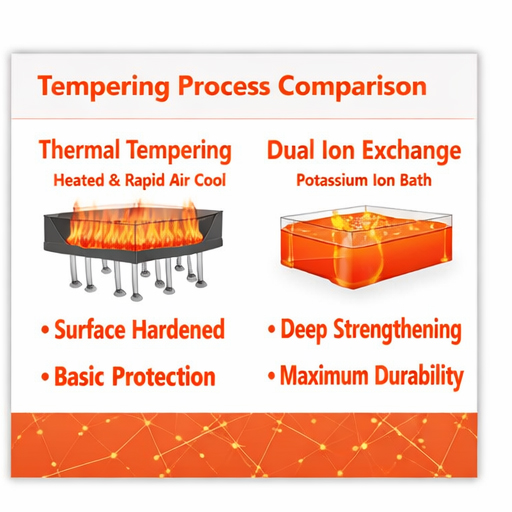
1. Physical (thermal) tempering
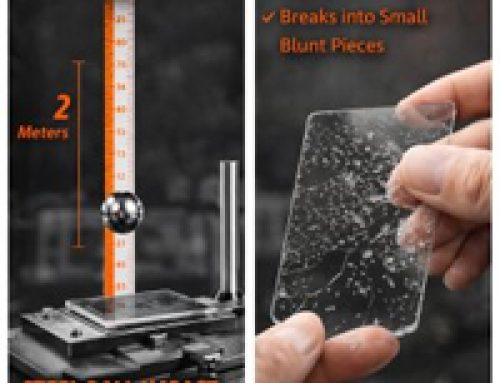
Glass is heated to extremely high temperatures in this process, and significant air pressure is used to swiftly cool it down. Surface compression is produced as a result, aiding in impact resistance.
- Strong resistance to impact
- For safety, breaks into tiny, blunt bits.
- Weakness: edges, particularly sharp corners, are prone to chipping.
2. Ion exchange, or chemical strengthening
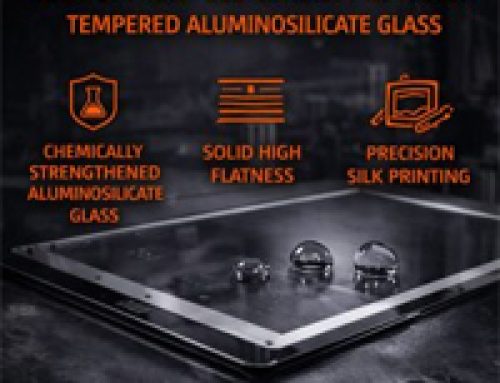
Here, heated potassium salt is used to soak the glass. The glass’s surface becomes denser and tougher as larger potassium ions take the place of smaller sodium ions.
- Increased compressive stress
- Increased resistance to scratches (9H level)
- Improved durability over time
The majority of current screen protectors combine the two techniques.
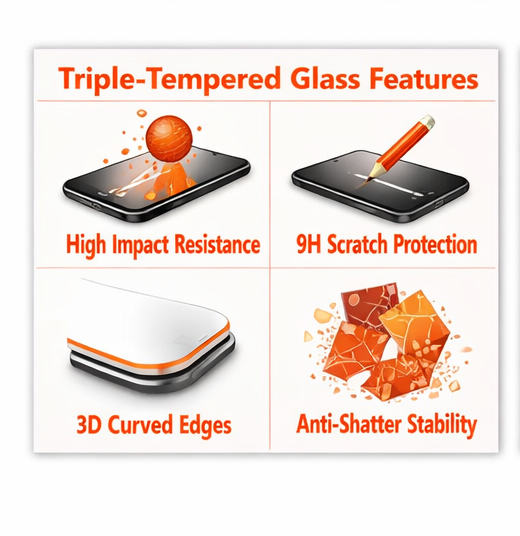
Single, Double, and Triple-Tempered Glass
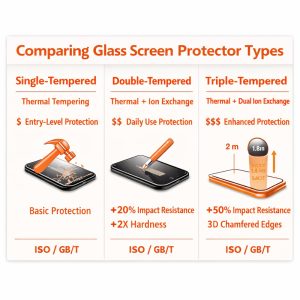
One-Tempered Glass
- Exclusively makes use of thermal tempering. It is typically featured on inexpensive screen protectors and offers rudimentary protection.
Double Tempered Glass
- Thermal tempering and one round of chemical strengthening are combined to create double-tempered glass. This enhances clarity, hardness, and impact resistance. It is reasonably priced and appropriate for everyday usage.
Glass with Three Temperatures
- Adds sophisticated treatments, including as dual ion exchange, stress balancing, and edge reinforcing, to double tempering. As a result, the entire glass surface is strengthened and protected more evenly.
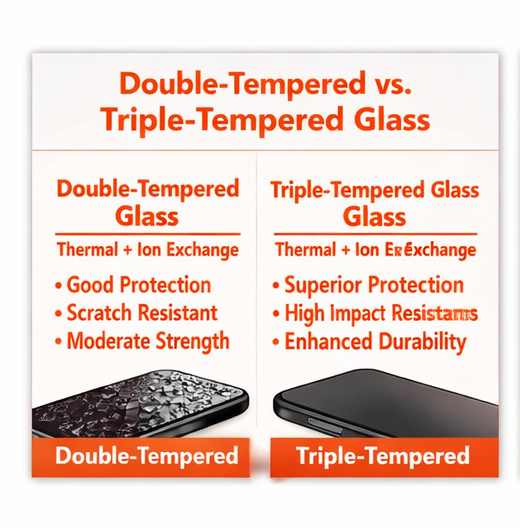
In contrast to double-tempered glass, triple-tempered glass provides:
- Increased impact resistance by up to 50%
- Improved durability of edges
- Increased transmittance of light (clearer display)
- Significantly reduced chance of spontaneous breaking
The Reasons Triple-Tempered Glass Is More Dependable
To increase uniformity and safety, triple-tempered glass undergoes additional procedures:
- Internal flaws that result in abrupt cracking are eliminated via homogenization treatment.
- Dual ion exchange guarantees uniform stress distribution.
- First-impact edge fractures and edge lifting are decreased by 3D curved chamfered edges.
Triple-tempered glass is now more stable thanks to these improvements, particularly for high-end phones.
Which One Is Best for You?
Select Double-Tempered Glass if
- It’s a mid-range phone.
- Mostly, you utilize it indoors.
- You’re looking for affordable, reliable protection.
Select Triple-Tempered Glass if:
- You have a flagship phone.
- You lead an active lifestyle or work outside.
- You want the highest level of touch sensitivity, clarity, and protection.

The Premium Tempering Solution from MPG
MPG employs unique 3D edge reinforcement, exact temperature control, stringent quality checks, and premium aluminosilicate glass. To guarantee superior performance and dependability, each protector is examined for impact resistance, clarity, and stress balancing.

Also please visit our new product:
https://www.mobilephoneguard.com/custom-logo-2-5d-9h-tempered-glass-screen-protector-for-iphone/